 ultimate-guide
What to Expect on a Boat Charter: A 2026 Guide
Table of Contents
- Bareboat vs. Captained Boat Charter: Which One Are You Booking?
- Types of Boat Charters: Day, Half-Day, Sunset, and Multi-Day
- What Is Included in the Charter Price
- How to Plan a Private Boat Itinerary
- What to Pack for a Boat Day
- Safety, Seasickness, and the Role of Your USCG-Licensed Captain
- Boat Charter Tipping Guidelines
- Environmental Responsibility and Connectivity on the Water
- Frequently Asked Questions
Last Updated: August 29, 2026
Bareboat vs. Captained Boat Charter: Which One Are You Booking?
A boat charter is a private rental of a vessel for a set period. The two main categories are bareboat and captained charters, and they are fundamentally different products.
A bareboat charter means you rent the vessel and operate it yourself. You need documented sailing or powerboating credentials and assume full responsibility for navigation, safety, and any damage.
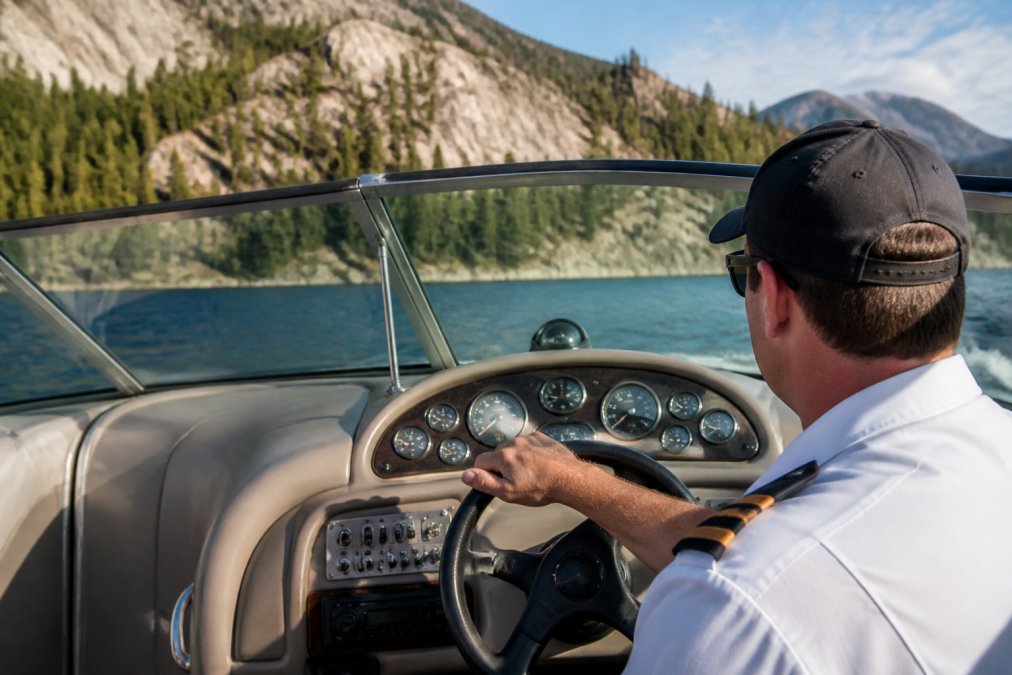
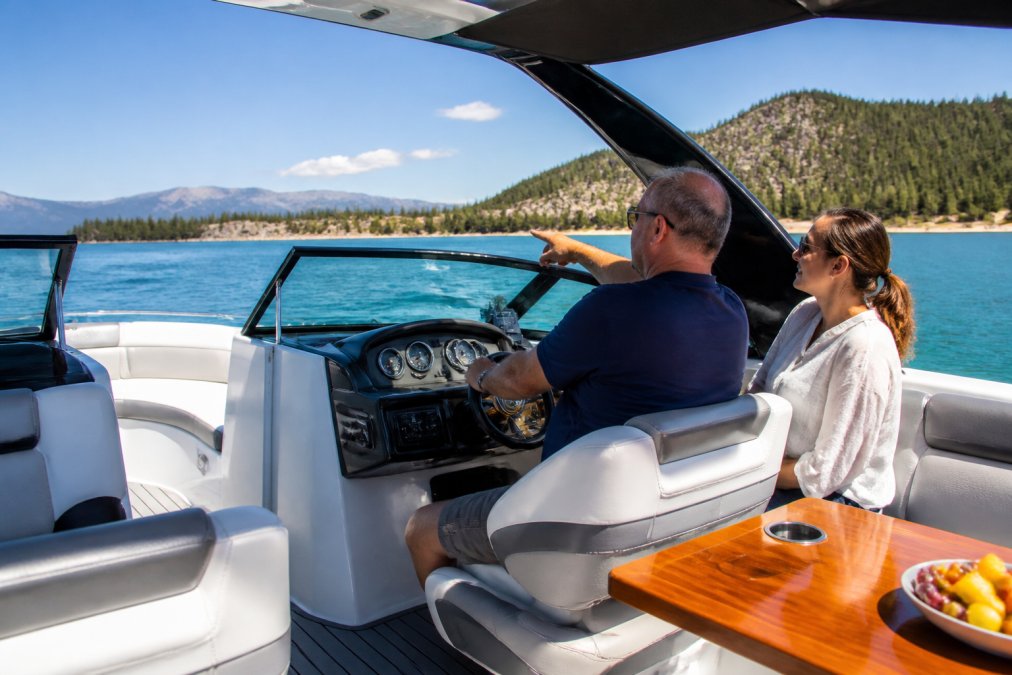
A captained charter (also called a skippered charter or crewed yacht experience) means a licensed professional operates the boat while you relax. This is the right choice for the vast majority of vacationers, families, and first-timers. At Tahoe Lakeside Charters, every excursion is a captained private charter, meaning you get a USCG-licensed captain with 24-plus years of professional boating experience handling all navigation while your group focuses entirely on enjoying the water.
On a bareboat, you're the skipper. On a captained charter, you're the guest. For most people, a captained private charter is the right call.
Types of Boat Charters: Day, Half-Day, Sunset, and Multi-Day
Charter formats vary significantly by duration and should match your group's energy, schedule, and goals.
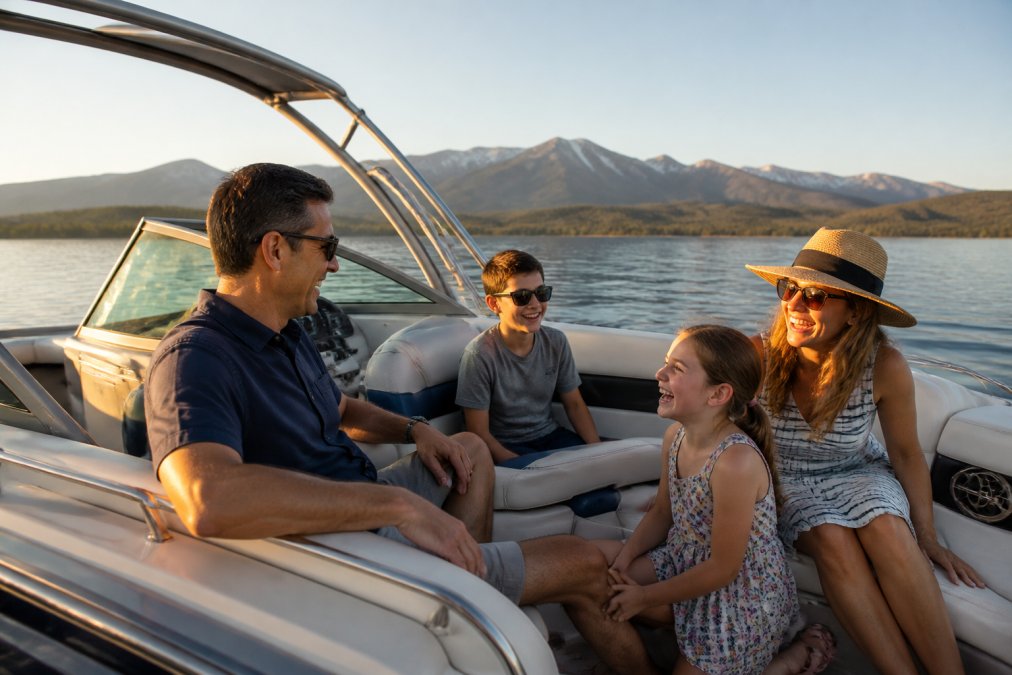
Day and Half-Day Charters
A half-day charter typically runs three to four hours and is ideal for families with young children, first-time guests, or visitors with tight itineraries. A full-day charter gives you six to eight hours on the water, allowing exploration of multiple anchorages and extended swimming time.
Sunset Cruises and Special Occasion Charters
Sunset cruises run two to three hours in the late afternoon and have become popular for anniversaries, proposals, and honeymoons. The lighting over the Sierra Nevada during golden hour is spectacular. Special occasion charters are customized around birthdays, bachelorette parties, or family milestones, with itineraries designed around the occasion rather than pure sightseeing.
What Is Included in the Charter Price
Understanding what's bundled into a private charter price prevents unpleasant surprises and helps you compare options accurately.
A standard captained private charter typically includes:
- The vessel itself, including fuel (confirm if fuel surcharges apply for longer trips)
- The captain's time and expertise, navigation, safety briefings, and local knowledge
- Basic onboard amenities, life jackets, safety equipment, and Coast Guard-required gear
- Port fees and marina access where applicable
- Snorkeling gear and water sports equipment (varies by operator; confirm in advance)
What is generally NOT included: food, beverages, gratuity, and specialized equipment beyond what the operator lists. A security deposit is common and typically held on a credit card.
Pricing varies based on vessel size, trip duration, season, and guest count. Peak season and weekend rates are higher. For Tahoe Lakeside Charters, visit the website directly for current pricing and availability.
How to Plan a Private Boat Itinerary
The biggest advantage of a private charter is that the itinerary is yours to shape. Most captains will send a proposed route in advance, but a brief conversation before boarding ensures alignment.
Choosing Anchorages and Stops
Good anchorages balance protection from wind, water clarity for swimming, and visual interest. Your captain will know which spots are accessible given vessel size and weather conditions. On a typical charter, you might visit two to three anchorages, spending 30 to 45 minutes at each.
A common mistake is over-scheduling. Groups that try to hit five stops in a half-day spend most of their time in transit. A focused itinerary with two quality stops beats an ambitious one that leaves no time to actually swim or explore. Tell your captain what matters most: swimming, photography, wildlife spotting, or quiet anchoring. The more specific you are, the better the route.
Weather Conditions and Flexible Routing
Weather on alpine lakes can shift faster than coastal environments. An experienced captain monitors forecasts closely and may adjust the itinerary based on wind patterns, afternoon thunderstorms, or chop. According to NOAA's marine weather guidance for inland waters, localized conditions on mountain lakes can diverge significantly from regional forecasts, which is why local knowledge matters.
Flexible routing is a feature, not a compromise. Trust your captain's judgment on real-time conditions.
What to Pack for a Boat Day
Packing for a boat day differs from packing for a beach day. Here's a practical checklist:
- Reef-safe sunscreen (SPF 30 or higher, applied before boarding)
- Polarized sunglasses
- Wide-brim hat or cap
- Dry bag for valuables
- Non-slip footwear or boat shoes
- Light layers (temperatures drop on the water)
- Snacks and non-alcoholic beverages
- Motion sickness medication if prone (taken 30-60 minutes before departure)
- Swimsuit and towel if swimming is planned
- Reusable water bottle
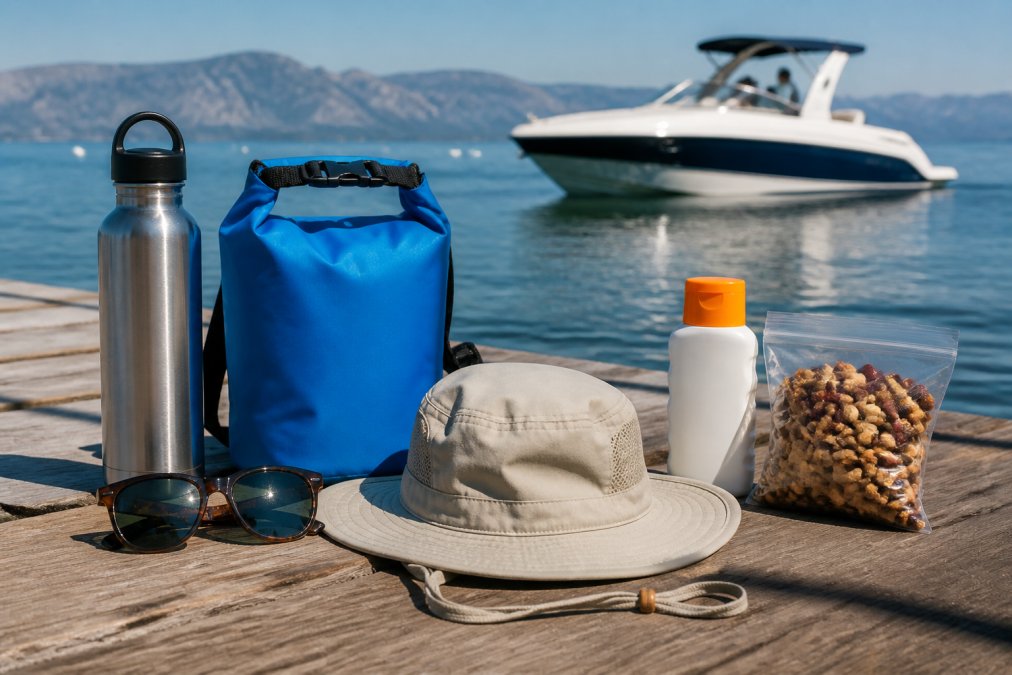
Leave behind: large rolling suitcases, glass bottles, excessive electronics, and anything you'd be devastated to lose overboard. Galley space on a day charter is limited, so compact bags are practical.
Safety, Seasickness, and the Role of Your USCG-Licensed Captain
Your captain is a licensed professional whose primary job is getting your group home safely.
Safety Briefings and Onboard Protocols
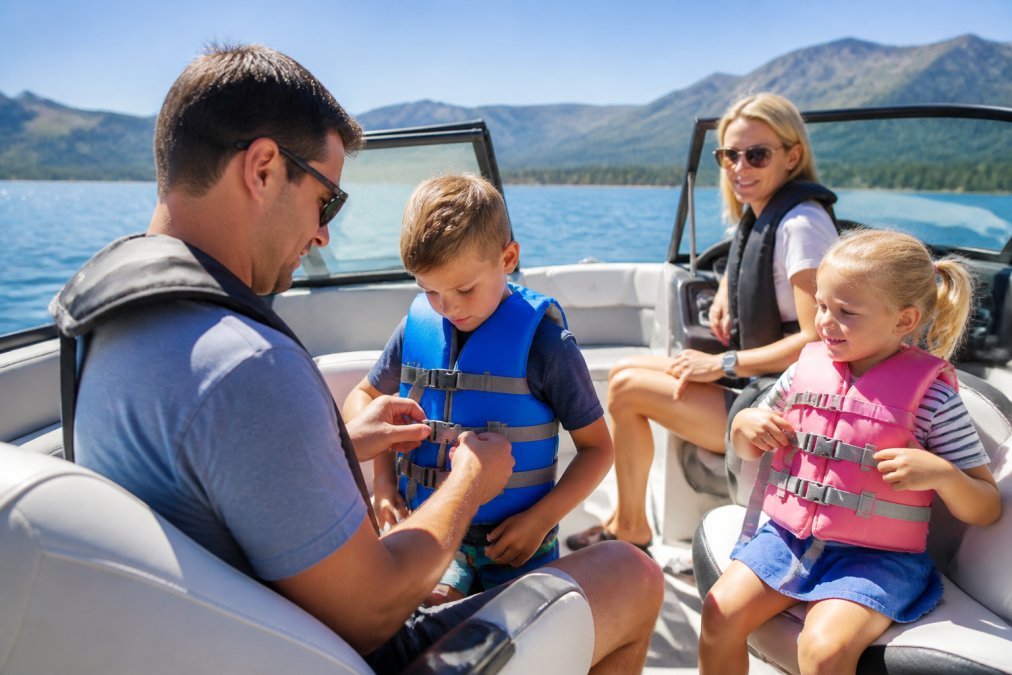
Every reputable charter begins with a safety briefing before departure, covering life jacket locations, emergency procedures, and fire extinguisher placement. Per U.S. Coast Guard recreational boating safety requirements, all vessels must carry Coast Guard-approved personal flotation devices for every person aboard.
Onboard protocols are straightforward: stay seated when the vessel is moving at speed, keep hands and feet inside, and follow the captain's instructions without delay.
Handling Seasickness and Medical Situations
Motion sickness is common on alpine lakes because chop tends to be short and irregular. Children and first-time boaters are particularly susceptible.
Practical steps:
- Take motion sickness medication 30 to 60 minutes before boarding
- Stay on deck in fresh air
- Fix your gaze on the horizon
- Avoid heavy meals and alcohol before departure
- Inform your captain early; they can adjust speed and routing
For medical emergencies, your captain is trained in basic first aid and carries required safety equipment. Inform the captain of any significant medical conditions before departure.
Boat Charter Tipping Guidelines
For a captained private charter, a tip of 15 to 20 percent of the charter fee is standard and expected in the U.S. marine industry.
| Service Level | Suggested Tip |
|---|---|
| Standard service, no issues | 15% of charter fee |
| Above-average service, extra effort | 18-20% of charter fee |
| Exceptional experience | 20%+ of charter fee |
| Issues arose through no fault of captain | 10-15% at your discretion |
If your charter includes a deckhand or stewardess, tip them separately, typically 10 to 15 percent each. Cash is preferred, given directly at the end of the trip. Tip based on the full charter fee, not discounted rates.
Environmental Responsibility and Connectivity on the Water
Environmental responsibility starts before you board. Reef-safe sunscreen is the most direct action, but avoid throwing anything overboard, including food scraps. Many anchorages sit within protected areas where disturbing marine life or anchoring on vegetation carries real consequences. As documented in NOAA's guidelines on responsible marine recreation, even well-intentioned interactions with wildlife can disrupt feeding, breeding, and migration patterns. On a private charter, ask your captain to choose quieter spots with less environmental pressure.
Connectivity on the water varies significantly by location, carrier, and distance from shore. Expect gaps. Many guests find this to be one of the unexpectedly pleasant aspects of a charter. If you need to stay reachable for an emergency, inform your captain, who has communication equipment on board. The best windows for connectivity are near the marina and within a nautical mile or two of populated shorelines.
The best boat charter experience comes from letting go of the impulse to manage everything and trusting the process. Your captain handles navigation, safety, and local knowledge. Your job is to show up prepared, stay present, and enjoy the water.
Planning a private excursion on the water takes more thought than most people expect, but the payoff is a genuinely personalized experience that no crowded tour boat can match. Tahoe Lakeside Charters offers exactly that: a USCG-licensed captain with 24-plus years of experience, a premium Formula 330 SS vessel, and fully custom itineraries designed around your group's priorities. Whether you're planning a family day on the water, a romantic sunset cruise, or a special occasion, the right charter makes the difference. Book your private charter with Tahoe Lakeside Charters and get on the water the right way.
Frequently Asked Questions
What is the difference between a bareboat charter and a captained charter?
A bareboat charter gives you the vessel with no crew, you or someone in your group must hold the required boating credentials and handle all navigation. A captained (or skippered) charter includes an experienced, licensed captain who handles navigation, safety briefings, and local route knowledge. For most vacationers, especially families and first-timers, a captained charter is the practical choice. It removes the stress of operating an unfamiliar vessel and lets everyone focus on enjoying the water.
How much should you tip a boat captain and crew?
The standard tip for a private boat charter captain is 15-20% of the charter fee, consistent with the broader hospitality industry. If a deckhand or stewardess is part of the crew, tip them separately, typically 15% of the charter fee split among crew. Cash is preferred. If the captain goes above and beyond (customizing the route, handling rough weather smoothly, or accommodating a special occasion), tipping toward the higher end is a genuine way to show appreciation.
What should I pack for a day on a private boat charter?
Prioritize sun protection: high-SPF reef-safe sunscreen, polarized sunglasses, and a wide-brim hat. Bring non-slip shoes or go barefoot, hard-soled shoes can mark the deck. Pack a light layer for wind and spray, a dry bag for electronics, and any medications including motion sickness remedies. Many private charters allow you to bring your own snacks and drinks, so a small cooler works well. Leave large suitcases behind; a soft-sided bag or backpack stows easily in the berth or galley area.
Are private boat charters safe for families with young children?
Yes, when the charter is led by a USCG-licensed captain with verified experience. Federal law requires Coast Guard-approved life jackets for all children under 13 while underway on recreational vessels. A qualified captain will conduct a safety briefing before departure, adjust the route based on weather conditions and vessel size, and carry the required safety equipment. If your children are prone to motion sickness, discuss this with the captain when booking, they can factor calmer anchorages and shorter stretches into the itinerary.
How do I customize my itinerary for a private boat excursion?
Talk to your captain before the trip. Share your priorities, sightseeing landmarks, swimming stops, snorkeling gear use, a sunset cruise, or simply cruising at your own pace. A good captain will map a route that covers your preferred stops within the time available, accounting for nautical miles, weather conditions, and peak season marina traffic. Most private charters build flexibility into the charter agreement so the route can shift on the day if wind or weather calls for it.
What can I expect at the safety briefing before departure?
Before leaving the marina, a USCG-licensed captain will walk your group through life jacket locations and fitting, emergency procedures, where to sit safely underway, and any rules specific to the vessel. You will also learn where the fire extinguisher, flares, and first aid kit are stored. The briefing typically takes five to ten minutes. Pay attention even if you have been on boats before, every vessel is different, and knowing the layout matters if conditions change quickly on the water.
How far in advance do I need to book a private charter?
During peak season, typically late spring through early fall, private charters on popular lakes book out quickly. Reserving at least one to two weeks ahead is advisable, and weekends can fill even faster. That said, last-minute availability does open up, especially on weekdays. Check directly with your charter provider for real-time availability. Most reputable operators have a clear cancellation and rescheduling policy in the charter agreement, so review that before you pay a deposit.
This article was written using GrandRanker