 how-to
Boat Charter Captain Qualifications: A 2026 Guide
Table of Contents
- USCG Master License and Merchant Mariner Credential Requirements
- Sea Time, Safety Training, and Medical Requirements
- What to Expect on a Boat Charter with a Qualified Captain
- Boating Laws and Regulations for Charter Operations
- Frequently Asked Questions
Last Updated: September 1, 2026
USCG Master License and Merchant Mariner Credential Requirements
A USCG Master License is the foundational credential that legally authorizes someone to operate a commercial vessel and carry passengers for hire. The Merchant Mariner Credential (MMC) is the official document issued by the Coast Guard that proves you hold this license. Without an MMC, you cannot legally captain a charter boat or accept payment for your services on the water.

To obtain your MMC, you must be at least 18 years old, hold a valid passport or acceptable identification, and pass a background check. You'll also need to pass the USCG written examination for your vessel class, demonstrating knowledge of navigation, maritime law, vessel operation, and safety procedures.
The official Coast Guard MMC application process outlines all required documents, including proof of sea time, medical certification, and training records. Processing typically takes several weeks, so planning ahead is essential.
Sea Time, Safety Training, and Medical Requirements
Sea time is the practical experience requirement that separates theoretical knowledge from real-world competency. The Coast Guard requires a minimum of 360 days of sea time for a Master license on vessels under 100 gross tons (uscg.gov). This experience must be documented in a logbook and verified by supervisors or other licensed mariners.
Every charter captain must hold a valid First Aid and CPR certification through the American Red Cross or equivalent provider. The Coast Guard also requires completion of specific maritime safety courses covering fire prevention, survival equipment operation, and emergency procedures.
A medical examination by a Coast Guard-approved Medical Examiner is mandatory before you can obtain your MMC (uscg.gov). The examiner evaluates your vision, hearing, and overall physical condition to ensure you can safely perform captain duties. This examination must be renewed periodically, typically every five years depending on your age.
What to Expect on a Boat Charter with a Qualified Captain
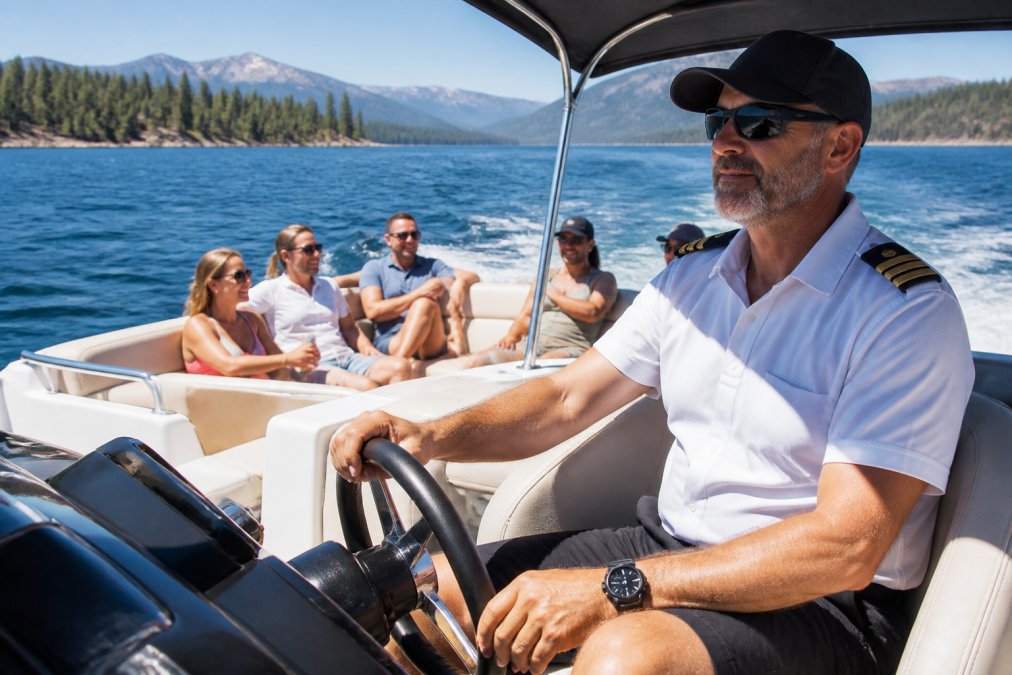
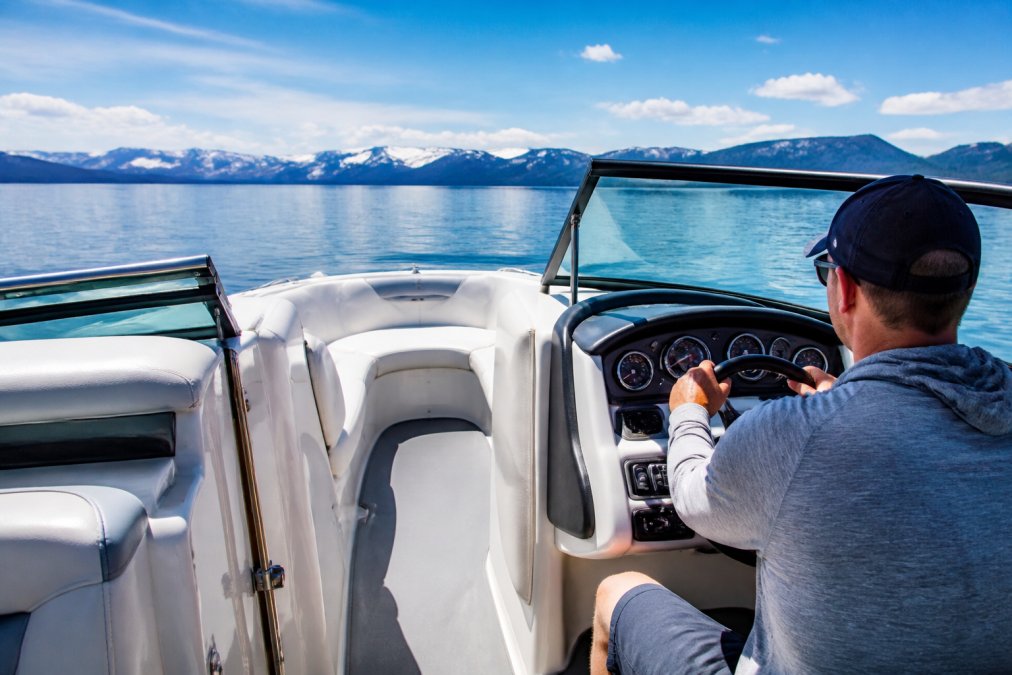
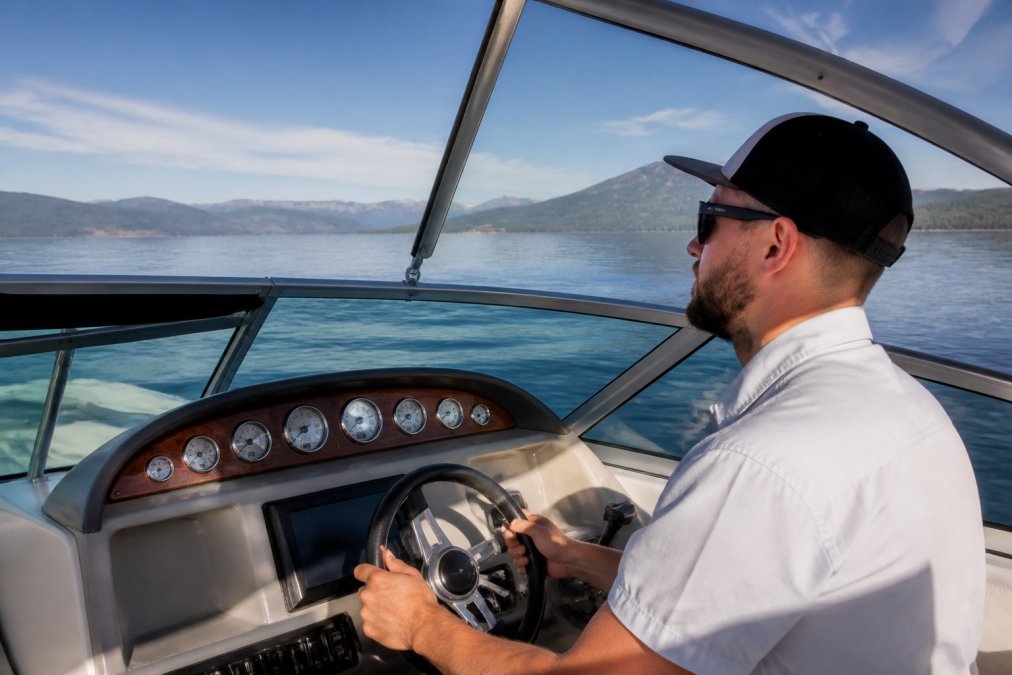
A qualified captain brings professionalism, safety awareness, and local knowledge to every charter. At Tahoe Lakeside Charters, our USCG-licensed captain ensures that your experience is both comfortable and secure from the moment you board. You'll notice immediately that a qualified captain maintains constant awareness of water conditions, weather patterns, and other vessels.
The captain's role extends beyond steering the boat. They conduct a pre-departure safety briefing, explain emergency procedures, and ensure all passengers understand basic safety protocols. A professional captain communicates clearly about what you'll see, where you're going, and how long activities will take, while managing the boat's systems and handling docking with precision.
Expect your captain to prioritize your comfort by adjusting speed for rough conditions and suggesting swimming spots or scenic viewpoints based on current conditions and your preferences. A captain with deep local knowledge knows where the clearest water is and what time of day provides the best light for photography.
Boating Laws and Regulations for Charter Operations
Charter operations must comply with federal maritime regulations established by the Coast Guard. Every commercial vessel carrying passengers must pass a rigorous safety inspection and receive a Certificate of Inspection (COI), which verifies that the boat meets all structural, mechanical, and safety equipment requirements.
Liability insurance is a legal requirement for charter operations. Operators must carry adequate coverage to protect passengers in case of injury or property damage. Charter captains must also undergo random drug testing as part of Coast Guard compliance to ensure captains operating vessels are not impaired.
Navigation and communication protocols are strictly regulated. Captains must monitor designated radio channels, file float plans for certain routes, and maintain accurate logbooks documenting all operations. These requirements create accountability and help rescue services locate vessels quickly if an emergency occurs.
Choosing a qualified charter captain means choosing safety, professionalism, and peace of mind. When you book with Tahoe Lakeside Charters, you're getting a USCG-licensed captain with 24+ years of professional boating experience who knows every detail of Lake Tahoe's waters. Our captain holds all required certifications, maintains a Coast Guard-approved vessel with a current Certificate of Inspection, and prioritizes passenger safety alongside creating an unforgettable experience. Book your private charter today and discover why qualified captains make all the difference.
Frequently Asked Questions
Q: Why is a USCG-licensed captain important for private boat charters?
A: A USCG-licensed captain has completed Coast Guard-approved training in vessel operation, navigation, emergency procedures, and passenger safety. This credential ensures the captain meets federal standards for commercial boating and carries liability insurance. For charter operations, a licensed captain is required by law to operate vessels carrying passengers for hire, protecting both you and your group on the water.
Q: What is the difference between a captain's license and a standard boater safety card?
A: A boater safety card is a basic certification for personal recreational boating. A USCG Master License or captain's license is a professional credential required for commercial charter operations. It requires documented sea time, passing a comprehensive Coast Guard exam covering maritime law, navigation, and emergency procedures, and maintaining a Merchant Mariner Credential. Only licensed captains can legally operate charter boats carrying paying passengers.
Q: How can I verify a charter captain's credentials before booking?
A: Ask the charter company for the captain's USCG Master License number and verify it through the Coast Guard's Merchant Mariner Credential database online. Request proof of current liability insurance and the vessel's Certificate of Inspection (COI). Check customer reviews mentioning the captain's experience and professionalism. A reputable charter company will readily provide these credentials and explain the captain's background, training, and years of professional boating experience.
This article was written using GrandRanker