
 how-to
Best Time for a Tahoe Boat Trip: A 2026 Guide
Table of Contents
- Why Timing Matters on Lake Tahoe
- Best Time of Day for a Tahoe Boat Trip
- Best Months for Lake Tahoe Boating
- Weekday vs. Weekend Boating and Boat Ramp Congestion
- How to Prepare for a Boat Charter
- Lake Tahoe Boat Rental Duration: How Long Should You Book?
- Frequently Asked Questions
Last Updated: September 12, 2026
Why Timing Matters on Lake Tahoe
Lake Tahoe is a mountain lake at 6,225 feet, and that elevation shapes everything about a day on the water. The best time for a Tahoe boat trip depends on three things working together: wind, boat traffic, and water temperature. Get the timing right and you get glassy water, easy parking at the ramp, and a relaxed captain. Get it wrong and you are fighting chop, wake, and a crowded launch line.
This guide from Tahoe Lakeside Charters breaks down the best time of day, the best months, and the smartest way to structure a charter so your group gets the lake at its calmest. Below, we cover exactly how wind, crowds, and temperature change hour by hour and month by month.
Best Time of Day for a Tahoe Boat Trip
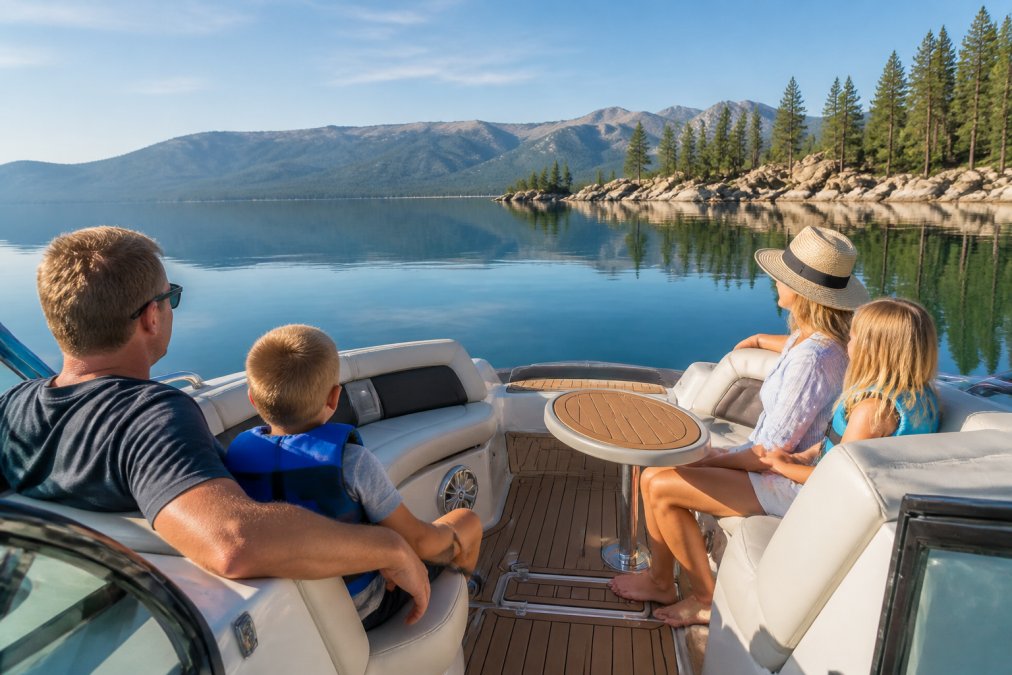
The best time of day for a Tahoe boat trip is early morning, typically between 7 and 10 a.m. Water is calmest, wind is lightest, and the lake surface is often mirror-smooth. Afternoon winds build as the valley heats up, so morning charters consistently deliver the most stable conditions for swimming, tubing, and sightseeing.
A common mistake is booking the middle of the afternoon and expecting calm water. Thermal activity builds through the day, and by 2 p.m. the open lake can turn choppy fast. The National Weather Service publishes marine forecasts for the Tahoe basin, and checking the wind forecast the night before is the single most useful habit for planning a smooth trip.
Morning vs. Afternoon Lake Conditions
Morning conditions favor calm water and clear visibility. Winds are typically light, the lake surface is stable, and you can cruise across open water without bracing for chop. This is also when wildlife sightings and glassy reflections of the mountains are most common.
Afternoon conditions bring afternoon winds, increased boat wake, and more thermal activity. That does not make afternoons unusable. A late-afternoon or golden hour cruise can be spectacular for photos and sunset views, but it comes with rougher water and more traffic. If your group includes young kids or anyone prone to motion sickness, morning is the safer bet.
Best Months for Lake Tahoe Boating
The best months for Lake Tahoe boating run from June through September, with July and August offering the warmest water and most reliable weather. Peak season brings the best swimming conditions but also the heaviest crowds. Late spring and early fall offer calmer ramps and quieter water, though air and water temperatures drop.
Peak season versus off-season changes your whole experience. In summer months you get warm days, long daylight hours, and water warm enough for extended swimming. In the shoulder seasons you trade some warmth for uncrowded lake access and a more peaceful day trip.
Water Temperature Trends by Month
Water temperature trends by month follow a predictable curve. Tahoe stays cold well into spring because of snowmelt, warms gradually through summer, and holds its heat into early fall. Water temperature matters most for swimming, so plan water sports for the warmest stretch of the season.
| Period | Water Temperature Trend | Best For |
|---|---|---|
| May to early June | Coldest, snowmelt-driven | Sightseeing, cruising |
| Late June to July | Warming steadily | Short swims, tubing |
| August | Warmest of the year | Swimming, water sports |
| September | Still warm, cooling slowly | Swimming, quieter cruising |
| October | Cooling quickly | Scenic cruising, golden hour |
For anyone sensitive to cold water, late summer is the window for comfortable swimming. Boaters who mainly want scenery and a stable ride will find the shoulder months perfectly enjoyable. The Centers for Disease Control and Prevention guidance on cold water safety is worth a read before any cold-water swim.
Weekday vs. Weekend Boating and Boat Ramp Congestion
Weekday boating wins on logistics, and the difference is bigger than most first-time visitors expect. Boat ramp congestion is the single most under-discussed pain point on a Tahoe boat trip, and it peaks on weekend mornings during the summer months. If your schedule is flexible, launching on a Tuesday, Wednesday, or Thursday means shorter lines, easier parking, and noticeably less wake on the water.
Why Ramp Congestion Happens
Public launch ramps on the lake are limited, and most of them serve a single lane or a small number of lanes. On a summer Saturday, that bottleneck collides with three separate demand spikes at once:
- Early-morning anglers who launch before sunrise and return mid-morning
- Day-trip boaters who arrive between 8 and 10 a.m. and want to be on the water by 10
- Rental and charter traffic that stages at the same ramps during peak check-in windows
The result is a queue that can stretch well past the ramp apron and into the access road. Once the parking lot fills, late arrivals are turned away or forced to wait for a returning trailer, which can add an hour or more to the front end of the day.
Best Launch Windows by Day Type
| Day Type | Best Launch Window | Why |
|---|---|---|
| Weekday (Tue-Thu) | 7-9 a.m. | Light traffic, ample parking, calm water |
| Weekday (Mon, Fri) | 6:30-8 a.m. | Slightly busier as long weekends bookend |
| Saturday | Before 7 a.m. or after 2 p.m. | Avoids the mid-morning crush entirely |
| Sunday | Before 7 a.m. | Return traffic builds by early afternoon |
| Holiday weekend | Before 6:30 a.m. | Ramps fill first, parking second |
A useful rule of thumb: if you are not on the water by 8 a.m. on a summer weekend, you are already behind the curve. The calm-water window and the ramp-congestion window overlap almost exactly, which is why morning departures solve two problems at once.
Crowd Density on the Water
Crowd density on the lake itself follows the same pattern. Weekends in July and August bring the most recreational boating traffic, which means busier coves, more anchored boats at popular swimming spots, and choppier water from accumulated wake. A weekday charter typically delivers calmer conditions and a more private feel, the difference between sharing a cove with two other boats and sharing it with twenty.
How to Skip the Ramp Entirely
If your group is booking a private charter, the ramp problem largely disappears. A professional captain handles launch logistics, staging, and retrieval, which means your group's day starts when you step aboard, not when you find a parking spot. For anyone towing their own boat, the trade-off is real: you save on charter cost but pay in time, fuel, and stress at the ramp.
How to Prepare for a Boat Charter
Preparing for a boat charter comes down to three things: checking the marine weather, packing for changing conditions, and confirming your safety protocols with the captain. A little prep the night before prevents most problems on the water.
Here is a practical pre-charter checklist:
- Check the marine weather forecast and wind patterns for your time slot
- Confirm your group size and any accessibility needs in advance
- Pack layers, sunscreen, and hats; mountain weather shifts quickly
- Bring water and snacks, and confirm what the charter allows aboard
- Ask about life jacket sizes for children and non-swimmers
- Confirm the meeting point and arrival time with your captain
- Have a backup plan if the weather turns
Safety Protocols and Weather Monitoring Tools
Safety protocols start with a licensed captain and a properly equipped vessel. Every charter should begin with a safety briefing covering life jacket locations, emergency procedures, and the day's expected conditions. Ask directly about the captain's credentials; a USCG-licensed captain has met federal training and testing requirements.
Real-time monitoring tools make a real difference. The National Weather Service marine forecast page provides wind and wave guidance, and apps that show live wind speed at nearby stations help you judge conditions hour by hour. Monitoring in real time lets a captain adjust the route or timing before rough water becomes a problem.
Lake Tahoe Boat Rental Duration: How Long Should You Book?
Lake Tahoe boat rental duration depends on your goals. A half-day charter suits sightseeing and a quick swim stop. A full-day rental gives you time for multiple coves, water sports, a lunch anchorage, and a relaxed pace without watching the clock.
For a first visit, a half day is often enough to see the highlights and get comfortable on the water. Groups who want to swim, tube, and explore several spots should book a full day. Rental duration also affects timing: a full-day booking lets you start in the calm morning and finish during golden hour, capturing the best of both.
| Rental Duration | Best For | Typical Pace |
|---|---|---|
| 2-3 hours | Sightseeing, quick swim | Fast, highlight-focused |
| Half day | Small groups, first visits | Moderate, one or two stops |
| Full day | Water sports, multiple coves | Relaxed, flexible |
| Sunset cruise | Couples, special occasions | Slow, scenic |
If you are unsure, tell your captain what your group most wants to do. A customized itinerary built around swimming, tubing, or sightseeing will naturally determine the right duration. Pricing for private charters depends on duration, group size, and date, so check with Tahoe Lakeside Charters for current rates and availability.
Timing a Tahoe boat trip well is mostly about respecting the wind and the calendar. Morning departures, midweek bookings, and the warmest summer months give you the calmest water and the best swimming. When you want the logistics handled and a route built around your group, Tahoe Lakeside Charters offers private, USCG-compliant charters for up to 10 guests aboard a premium Formula 330 SS, led by a USCG-licensed captain with more than 24 years of experience. Get started with Tahoe Lakeside Charters and turn a good day on the lake into an unforgettable one.
Frequently Asked Questions
What time of day is best for boating on Lake Tahoe?
Mornings typically offer the calmest conditions. Winds tend to pick up in the afternoon, creating choppier water. For the smoothest ride, book an early departure. If you prefer warmer temperatures and golden hour views, late afternoon works well too, but expect more wind. A private Tahoe boat charter can help you plan around daily wind patterns.
Are morning or afternoon boat charters better for families?
Morning charters are often better for families with young children because the water is calmer, reducing motion sickness risk. Afternoon trips offer warmer air and water, which is ideal for swimming and water sports. Consider your group's priorities: smooth cruising versus warm-water activities. Many families book a full-day rental to enjoy both.
How far in advance should I book a private boat charter?
During peak season (June through August), book at least two to four weeks in advance, especially for weekend dates. For holidays like the Fourth of July, reserve one to two months ahead. Last-minute bookings are sometimes possible on weekdays, so call directly to check availability. Booking early secures your preferred time and duration.
What should I bring on a Lake Tahoe boat charter?
Bring layers, as temperatures can change quickly on the water. Pack sunscreen, sunglasses, hats, and towels. Most charters allow you to bring your own snacks and drinks, so pack a cooler. If you plan to swim, bring swimsuits and a change of clothes. Confirm with your captain what is provided onboard, such as life jackets and floatation devices.