
 ultimate-guide
Is Lake Tahoe Safe for Children? A Parent's Guide
Table of Contents
- What Makes Lake Tahoe Safe (and Risky) for Kids?
- Water Safety Rules Every Parent Must Enforce
- High Altitude and Sun Protection: Acclimatization Tips
- Wildlife Safety: Bears, Coyotes, and What to Do
- Medical and Urgent Care Access Near the Lake
- Essential Safety Gear for Tahoe Charter Vessels
- Boating Safety Tips for Families on the Water
- Conclusion: Planning a Safe Family Vacation
- Frequently Asked Questions
Last Updated: September 6, 2026
What Makes Lake Tahoe Safe (and Risky) for Kids?
Lake Tahoe is safe for children when parents plan around its alpine environment rather than treating it like a typical beach vacation. Safety comes down to three controllable factors: water supervision, high altitude awareness, and wildlife encounters.
The lake is stunning but demanding. Water temperatures rarely climb above the mid-60s even in summer, posing a cold-water shock risk. The shoreline drops off quickly in many areas, and the sun at 6,200 feet can burn skin in under twenty minutes. None of these factors make Lake Tahoe unsafe, but they mean parents should treat the environment with respect.
Water Safety Rules Every Parent Must Enforce
The single most important rule is that children under 13 must wear a properly fitted US Coast Guard-approved life jacket whenever they are on a boat, dock, or floating device (uscgboating.org). This is not a suggestion; it is federal law enforced by the Coast Guard on navigable waters, and it applies equally to private charters and rental boats. Life jackets should be snug enough that you cannot lift them over a child's head when the child raises their arms.
When swimming from shore, the rules change. Lake Tahoe has no shallow end, no lane lines, and no lifeguard on most beaches. The water is cold, clear, and deep, and even strong swimmers can fatigue quickly. A neoprene wetsuit extends safe swim time. Designate one adult as the "water watcher" with no phone and no conversation duties, rotating every fifteen minutes.
Know which beaches are actually safe for young children. The sand beaches at Pope Beach, Baldwin Beach, and Kiva Beach on the South Shore have gentle, gradual slopes that let toddlers wade safely. In contrast, many rocky coves along the West Shore drop off abruptly, a child can be in water over their head within three steps of the shoreline. Look for beaches with a visible sandy bottom and no sudden drop-off before letting young children enter.
Lifeguards are rare. Only a handful of beaches have seasonal lifeguards, including Lakeview Beach in Tahoe City and El Dorado Beach in South Lake Tahoe. Most of the lake's 72 miles of shoreline is unguarded. Assume no lifeguard is present and plan supervision accordingly.
Cold water is a hidden hazard even on hot days. Surface temperatures in July and August can reach the mid-60s, but a thermocline sits 10 to 15 feet below the surface where water plunges into the 40s (ucdavis.edu). A child who swims over a drop-off can suddenly hit water cold enough to trigger involuntary gasping and muscle failure.
Teach the "feet-first entry" rule before you arrive. Every child should know that when they cannot see the bottom clearly, they enter the water feet-first, never dive. Underwater rocks, fallen trees, and sudden depth changes are invisible from above. This single rule prevents most serious swimming injuries on the lake.
Set physical boundaries based on age. Children under 6 stay within arm's reach of an adult at all times, even with a life jacket on. For children 6 to 10, establish a visible landmark and a depth limit no deeper than chest height. Confident swimmers over 10 use the buddy system but still wear a life jacket beyond wading depth.
High Altitude and Sun Protection: Acclimatization Tips
Lake Tahoe sits at 6,200 feet above sea level, and the altitude affects children more quickly than adults. Symptoms of altitude sickness in kids include headache, nausea, dizziness, and unusual fatigue. The acclimatization process takes roughly 24 to 48 hours, so plan a low-exertion first day (the CDC). Avoid hiking or extended lake time immediately after arrival.
Hydration is the most effective countermeasure. Children need significantly more water at altitude because the dry air and increased respiration rate cause faster fluid loss. Offer water every 30 minutes, even if the child says they are not thirsty. Dehydration at altitude mimics altitude sickness and compounds the symptoms.
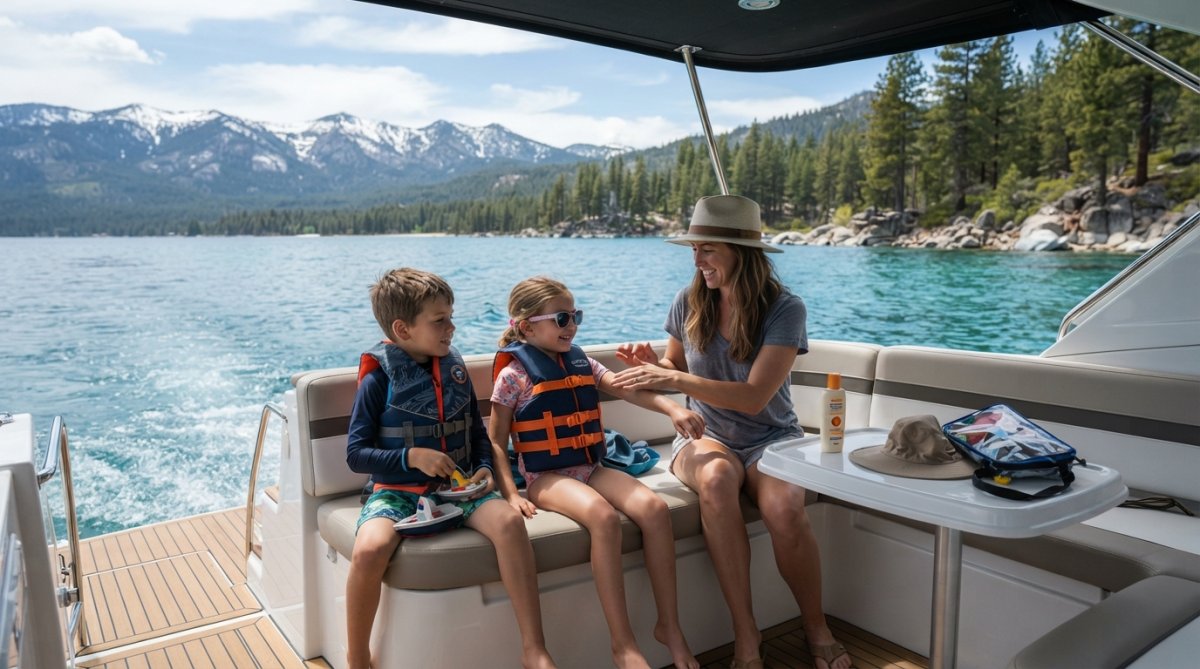
Sun protection is equally critical. The thinner atmosphere at altitude filters less UV radiation, and the lake's surface reflects sunlight upward, burning skin under the chin and inside the ears. Use a broad-spectrum SPF 50+ sunscreen, reapply every two hours, and outfit children in rash guards with built-in UV protection. A wide-brimmed hat is non-negotiable, and polarized sunglasses prevent eye strain from the intense glare.
Wildlife Safety: Bears, Coyotes, and What to Do
Bear encounters are rare in the main tourist areas, but Tahoe is bear country, and the animals are active year-round. The key principle is that bears are food-motivated, not people-motivated. Never leave food, snacks, or scented items like sunscreen or lip balm in a car or on a beach unattended. Bears that learn to associate humans with food become habituated and dangerous, which is why the region enforces strict food storage rules.
If you see a bear, do not run. Running triggers a chase response. Instead, stand still, make yourself look larger by raising your arms, and speak in a calm, firm voice while backing away slowly. Coyotes are more common and generally shy, but they will approach if they associate humans with food scraps. Keep children close during dawn and dusk hours when coyotes are most active, and never allow a child to chase or feed any wild animal.
Medical and Urgent Care Access Near the Lake
Most family travel guides skip this topic, but knowing where to get help is the single most important safety preparation you can make. The lake is a remote mountain destination, and medical resources are spread thin across a 72-mile shoreline.
Emergency response times are longer than you expect. The lake is ringed by two-lane highways, and winter weather or summer traffic can double response times. From Tahoma or Homewood on the West Shore, an ambulance can take 30 to 45 minutes; from remote trailheads, even longer. Dial 911 in any emergency, but understand help is not minutes away.
Cell coverage is genuinely unreliable. All four major carriers have dead zones along the lake, particularly on the West Shore, around Emerald Bay, and near Kings Beach. Download offline maps for the entire lake basin before you arrive, and carry a physical map as a backup. Tell someone on shore where you are going and when you expect to return before any hike or remote beach visit.
Know the two hospitals by name. The primary full-service hospital is Barton Memorial Hospital in South Lake Tahoe (2170 South Avenue), with a 24-hour emergency department and the only hospital on the California side. On the Nevada side, Renown Health's Tahoe Forest Hospital in Incline Village (10115 Professional Circle) provides emergency services, though smaller. Both handle pediatric emergencies, but specialized care may require transport to Reno or Sacramento.
Urgent care is your best option for non-emergencies. For altitude sickness, minor cuts, ear infections, or dehydration, urgent care is faster and cheaper than the ER. Barton Health operates a clinic in South Lake Tahoe (1090 Third Street), open daily with extended summer hours. Tahoe Forest Urgent Care in Truckee (10956 Donner Pass Road) serves the North Shore. Walk-ins are typically available, but call ahead on peak summer weekends when waits can reach two hours.
Pharmacies are concentrated in the main towns. CVS and Rite Aid operate in South Lake Tahoe, with additional locations in Truckee and Incline Village. From a remote West Shore cabin or near Emerald Bay, the nearest pharmacy may be 30 to 45 minutes away. Pack children's acetaminophen, ibuprofen, antihistamines, and motion sickness medication before you arrive.
Dental and pediatric specialists are limited. If your child has a chronic condition, allergy, or dental issue that could flare up, bring enough medication for the entire trip plus a few extra days. There is no children's hospital on the lake. For anything beyond basic urgent care, the nearest pediatric specialty services are in Reno, roughly an hour from the South Shore and 45 minutes from Incline Village.
If you are staying in a vacation rental, ask about the nearest clinic on day one. Many rentals are in unincorporated areas with no nearby services. Identify the closest urgent care, its hours, and drive time before you need it. This five-minute step prevents a stressful search when your child spikes a fever at 9 PM on a Saturday.
Essential Safety Gear for Tahoe Charter Vessels
When you book a charter with a reputable company, most essential safety gear is already onboard. Federal law requires all charter vessels to carry life jackets for every passenger, fire extinguishers, visual distress signals, and sound-producing devices. Parents should verify that child-sized life jackets are available before boarding, as adult sizes do not fit children safely.
For private excursions, parents should confirm or bring a few items themselves. A well-stocked first aid kit with motion sickness medication is wise, as sudden gusts and waves can unsettle sensitive stomachs. Sun protection, extra layers, and plenty of drinking water round out the essentials.
| Gear Item | Who Provides It | Why It Matters |
|---|---|---|
| USCG-approved life jackets (child sizes) | Charter company | Legal requirement; prevents drowning |
| First aid kit | Charter company | Treats minor cuts, scrapes, seasickness |
| Sunscreen (SPF 50+) | Family | Prevents burns at high altitude |
| Drinking water | Both | Prevents dehydration and altitude sickness |
| Extra warm layers | Family | Lake temperatures drop quickly in wind |
Boating Safety Tips for Families on the Water
A calm morning can turn choppy by afternoon, so families should choose morning departures when the water is most stable. Sudden wind gusts are common, and the lake's depth creates larger waves than many expect. An experienced captain who knows the lake's weather patterns is the best safety asset a family can have.
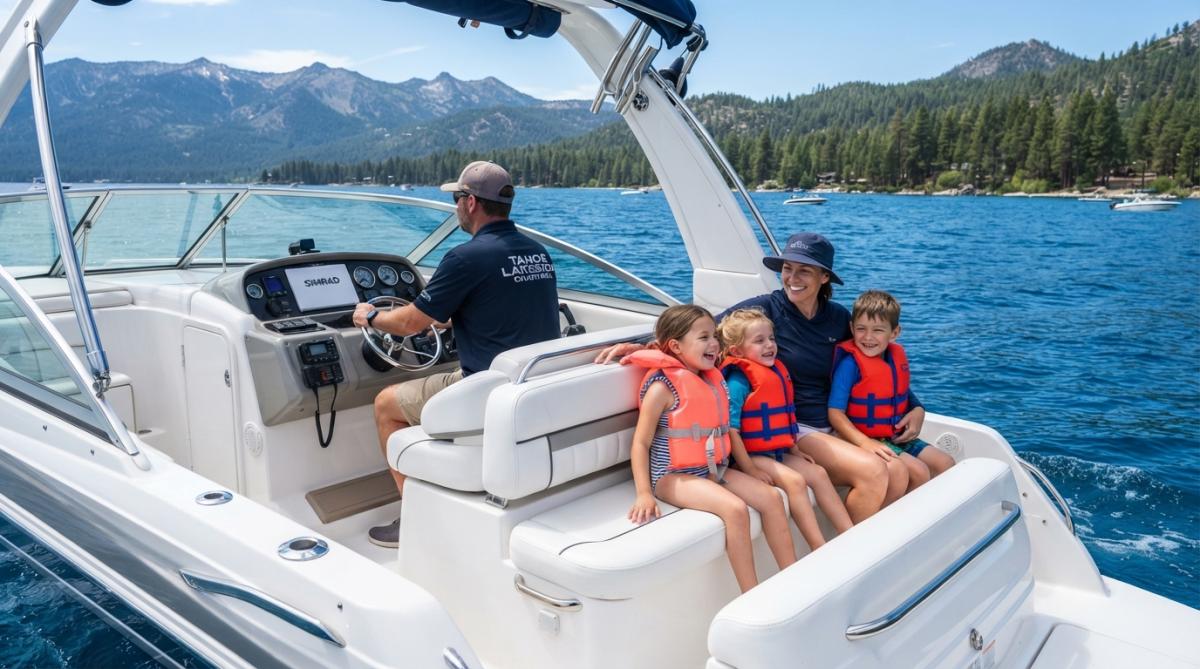
Before boarding, establish family rules: children remain seated while underway, no running on deck, and no leaning over the rails. If your child is prone to motion sickness, administer medication at least 30 minutes before departure. Choose a seat in the middle of the boat where motion is least noticeable.
When anchoring for a swim, use the boat's designated swim ladder and have children enter the water feet-first. Never allow jumping from the bow or the roof of the cabin, as underwater obstacles and sudden depth changes pose risks. A floating dock or calm cove is ideal for young swimmers.
The comfort of a private charter can offer a more focused experience. A private vessel with a captain focused solely on your family allows for immediate response to a queasy child, a bathroom request, or a sudden need to head back.
Conclusion: Planning a Safe Family Vacation
Lake Tahoe offers families an outdoor experience few destinations can match, and the safety considerations are manageable with preparation.
At Tahoe Lakeside Charters, we prioritize family safety through USCG-compliant vessels, child-sized life jackets, and a captain with 24+ years of professional boating experience. Our private charters keep your group together, away from crowded tour boats, with a flexible itinerary that adapts to weather and your children's needs. Bring your own snacks, your sunscreen, and your sense of adventure, and let us handle the rest. Book your family's day on the lake and see why Tahoe is a destination worth returning to year after year.
Frequently Asked Questions
What are the biggest safety risks for children at Lake Tahoe?
The main risks are cold water shock, sun exposure at high altitude, and wildlife encounters. Water temperatures rarely exceed 65°F even in summer, so hypothermia is a real concern. Sunburn happens faster at 6,200 feet because there is less atmosphere to filter UV rays. Bears and coyotes are active in the area, so proper food storage and keeping a safe distance are important.
Are there specific water safety rules for minors on private charters?
California law requires all children under 13 to wear a USCG-approved life jacket while on a moving vessel. On private charters, the captain will provide properly fitted life jackets for your children's weights. It is also wise to establish rules about staying seated while the boat is moving and asking the captain before entering the water.
What essential safety gear should we bring for a family boating day?
Pack sunscreen with SPF 50, a wide-brimmed hat, and polarized sunglasses for each child. Bring layers, as the weather can shift quickly. A waterproof dry bag for electronics and extra towels is useful. If your child is prone to motion sickness, consider an over-the-counter remedy and consult your pediatrician before the trip.
How do I prepare my children for a day on a boat?
Talk to them about boat rules before boarding: no running, always listen to the captain, and stay seated while underway. Have them use the restroom before departure. Explain what to expect if the boat stops for swimming. If your child feels anxious, let the captain know; an experienced captain can adjust the ride to keep everyone comfortable.